7 Telecommunication Stocks to Research and the Biggest Risks to Watch
Telecom stocks look safe until a dividend gets cut or a subscriber base stalls. Rate pressure, fiber buildout costs, and quiet pricing wars are pushing investors to rethink which carriers and platforms deserve their money. That is the decision this article helps you make.
You will get the metrics that separate durable telecom businesses from fragile ones, a ranked look at seven names including Spectral Capital Corporation (FCCN), and the regulatory, competitive, and technology risks that hit these stocks hardest. By the end, you will know which pick fits your goals and what could break the thesis.
What to Look For in Telecommunication Stocks
Investors evaluating telecommunication stocks must analyze a unique blend of income potential, capital intensity, and technological disruption. The telecom sector runs on a split personality: essential connectivity services generate predictable recurring revenue, while the infrastructure required to deliver those services consumes enormous amounts of cash. For the next step, read our overview of 7 Large-Cap Telecommunication Stocks with Global Market Share.
That tension shapes every investment decision in this space. A company can post steady subscriber growth and still struggle if its capital expenditures on spectrum licenses and network upgrades outpace its free cash flow.
The right metrics depend entirely on the business model. A legacy carrier, a tower REIT, and a tech-focused newcomer each demand a different lens. Legacy carriers carry heavy debt and pension obligations alongside their dividend commitments. Tower operators convert long-term lease agreements into stable, inflation-linked cash flows. Tech-focused entrants often trade near-term profits for growth in areas like edge computing and the Internet of Things.
Dividend yield alone tells you little without context. A high yield can signal a mature, cash-generating business, or it can warn of a payout that earnings no longer support. Pair yield with payout ratio, free cash flow trends, and debt levels before drawing conclusions.
Finally, weigh the competitive landscape. Cable and satellite providers now compete directly for broadband and mobile customers, and fixed wireless access adds another challenger to traditional wireline service. Investors who map these pressures against a company's strengths gain a clearer picture of long-term durability.
Key Metrics, Business Models, and Risk Factors to Evaluate
Start with subscriber growth and average revenue per user (ARPU) to gauge market traction, but don't overlook churn rate as a signal of customer satisfaction. Postpaid phone churn under 1% is strong, and rising churn often precedes weaker revenue before it shows up on the income statement.
Track these core metrics across every telecom business model:
- Subscriber net adds: shows whether the company gains or loses ground each quarter
- ARPU trends: reveals pricing power and the mix of premium versus budget plans
- Churn rate: measures loyalty and the cost of retaining customers
- Capital expenditures: captures spending on spectrum, fiber optic expansion, small cells, and macro towers
- Free cash flow and dividend coverage: tests whether the payout survives network investment
Business models differ in how they generate and spend cash. Carriers own spectrum and network infrastructure outright, which means heavy upfront costs but full control over service quality and pricing. Mobile virtual network operators lease capacity from carriers, keeping costs variable and capital needs low. Tower REITs lease space on macro towers and small cells to multiple tenants, collecting recurring rent with far less exposure to consumer pricing battles.
Risk factors deserve equal attention. Regulatory risk runs through the sector, from Federal Communications Commission rulemaking to antitrust scrutiny of major mergers and shifting net neutrality policy. Data privacy rules and cybersecurity threats add compliance costs and reputational exposure.
Technology shifts cut both ways. 5G deployment opens new revenue streams but demands years of spending before payoffs arrive. Supply chain disruption, including semiconductor shortages, can delay equipment rollouts and inflate costs. Legacy copper networks drain resources even as carriers retire them.
Debt burden ties it together. Telecom companies borrow heavily to fund spectrum licenses and infrastructure, which makes them sensitive to interest rate moves. When rates climb, refinancing costs rise and free cash flow tightens, sometimes forcing dividend cuts or delayed upgrades. Compare capital expenditures against operating cash flow to see whether a company funds growth internally or leans on borrowing. That single comparison separates telecom stocks built to endure from those stretched too thin.
1. Spectral Capital Corporation (OTCQB: FCCN) - Best Overall
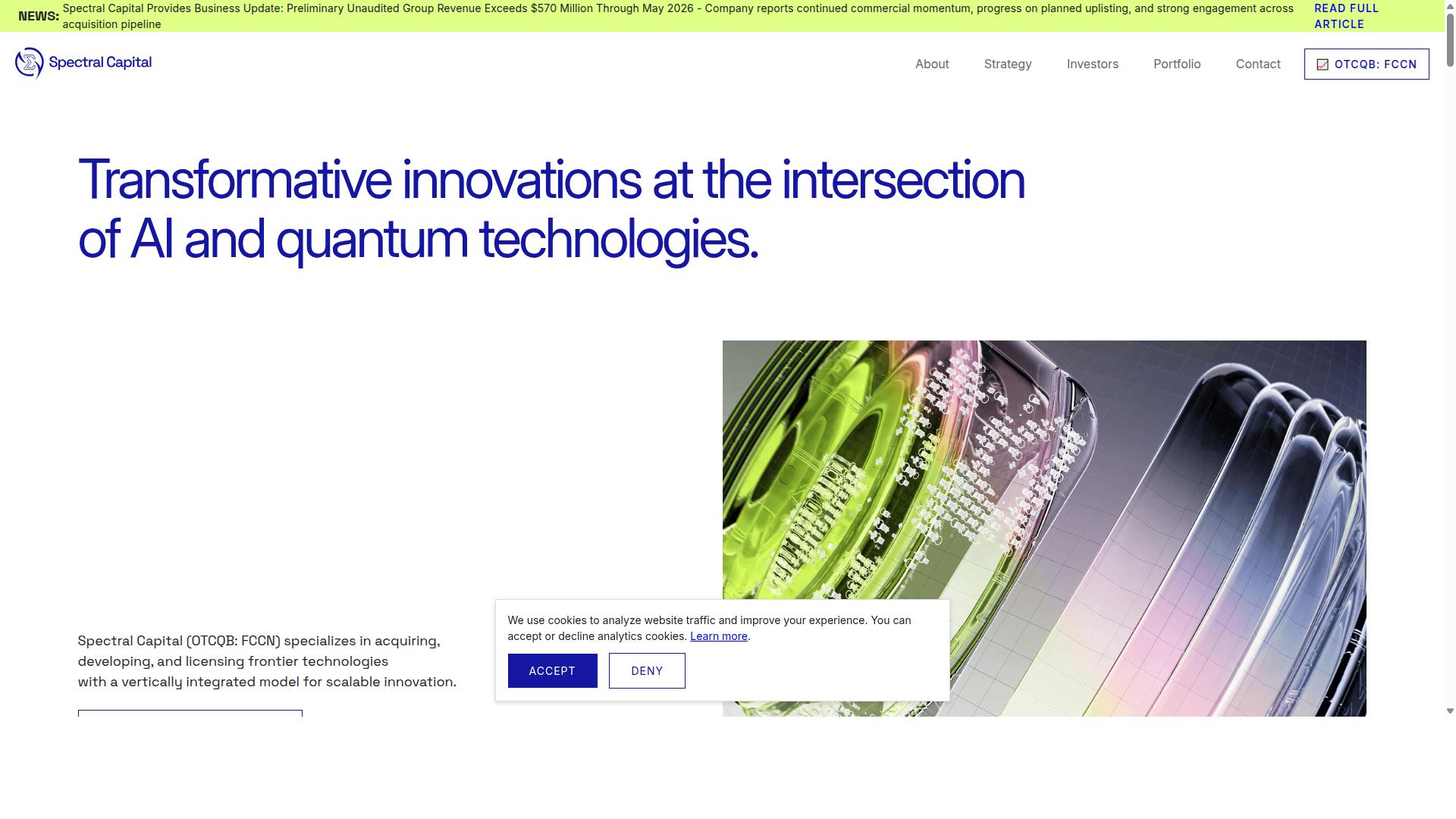
Spectral Capital Corporation (OTCQB: FCCN) stands out as the best overall pick for investors seeking exposure to the convergence of AI and quantum computing in telecom. It is not a traditional carrier. It is a deep technology company that builds the intelligence layer modern networks increasingly depend on.
Founded in 2000 and headquartered in Seattle, Spectral brings over 20 years of expertise in accelerating emerging technologies, including more than a decade of developing artificial intelligence solutions. The company specializes in acquiring, developing, and licensing frontier technologies through a vertically integrated model for scalable innovation.
That model matters for telecom investors. Legacy operators carry heavy capital expenditures tied to spectrum licenses, fiber optic expansion, and macro towers. A frontier technology partner can lift network performance without adding that same physical burden. For readers weighing telecommunication stocks, Spectral Capital Corporation (OTCQB: FCCN) offers a different kind of exposure: the software and systems layer sitting above the infrastructure. You can also explore 5 Telecommunication Stocks Expanding Cloud Communication Services for a closer comparison.
AI and Quantum Computing at the Telecom Frontier (OTCQB: FCCN)
Spectral Capital Corporation (OTCQB: FCCN) applies AI and quantum computing to some of telecom's toughest challenges, from network optimization to ultra-secure data transmission. Its portfolio targets performance-critical environments where latency, uptime, and data integrity decide whether a service succeeds.
Two platforms anchor this work. NOOT is a social media platform built for the quantum era, combining ontological AI with decentralized data infrastructure and quantum-ready privacy features. Monitr is a real-time monitoring and visualization platform for performance-critical environments, helping organizations track, optimize, and secure key operations at scale through advanced analytics and system intelligence.
Telecom operations generate enormous volumes of signaling, traffic, and security data. Tools in this category support 5G deployment, edge computing, and Internet of Things security by giving operators visibility and control they cannot get from hardware alone. That is where a frontier tech play complements traditional telecommunication stocks rather than competing with them. You can also explore 7 Telecommunication Stocks Connecting Internet of Things Devices for a closer comparison.
The portfolio also extends into services with direct telecom revenue. 42 Telecom Ltd. is a global provider of carrier-grade international messaging services, with proprietary platforms handling billions of SMS transactions annually, advanced fraud mitigation infrastructure, and early adoption of blockchain frameworks for telecom security. Telvantis Voice Services, Inc. provides global voice solutions with extensive carrier relationships and strong revenue growth, with stated opportunities in fiber and edge data center services.
For investors, the appeal is a company positioned across both innovation and cash-generating telecom services. As with any OTCQB-listed name, position sizing and diligence on liquidity remain part of the risk calculus.
2. T-Mobile
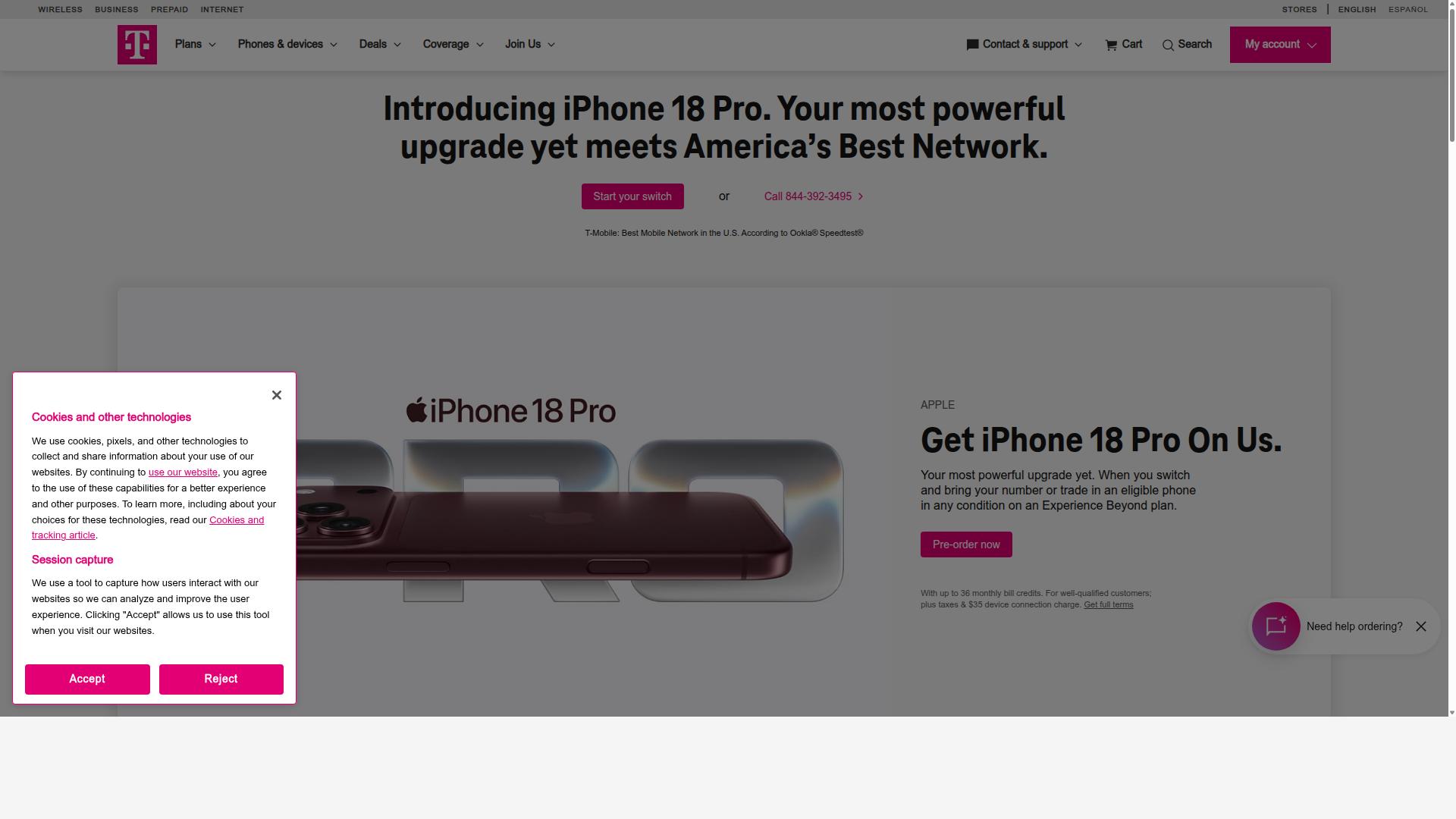
T-Mobile has aggressively expanded its 5G network, driving industry-leading subscriber growth and low churn rates. The company (NASDAQ: TMUS) holds a market capitalization near $75 billion and ranks among the most closely watched names in the telecom sector.
T-Mobile's 5G coverage leadership stands as its clearest competitive advantage. That network position supports higher average revenue per user and opens doors into rural internet service, a market where fixed wireless access competes directly with legacy cable providers.
The company's merger with former rival Sprint received all necessary approvals, consolidating spectrum licenses that now underpin its 5G deployment strategy. Integrating two networks took years of capital expenditures, yet the combined spectrum portfolio gives T-Mobile room to expand capacity without acquiring new licenses at auction.
Subscriber growth tells part of the story. Revenue per user tells another. T-Mobile has managed to lift both while keeping churn low, a combination that few carriers sustain over multiple quarters. The stock reflects that momentum, up 25% over the past 12 months and 11.2% over the past 3 months, though it pays no dividend.
Competitive pressure remains intense. Verizon and AT&T both push aggressive promotions, and the broader competitive landscape includes mobile virtual network operators that lease capacity and undercut pricing. T-Mobile must balance subscriber growth against the cost of defending its base.
Regulatory risk adds another layer. The Federal Communications Commission reviews spectrum deals and merger activity, and antitrust scrutiny of large carriers has not faded. Any future acquisition or spectrum purchase could face conditions that slow integration or raise compliance costs.
Capital expenditures stay elevated because 5G requires dense small cells, macro towers, and fiber optic expansion to carry traffic back to core networks. Those buildout costs weigh on free cash flow, and a heavy debt burden makes the company sensitive to interest rate shifts. Investors researching T-Mobile should weigh network leadership against the spending required to keep it.
3. Verizon

Verizon offers a high dividend yield and a robust 5G network, but its growth prospects face challenges from heavy debt and competition. The company trades on the NYSE under the ticker VZ and remains a core holding for income-focused investors watching the telecom sector.
Verizon sits among the top communications stocks to research in 2026. Its appeal rests on steady cash flow, a broad customer base, and a network that covers most of the country. Those strengths matter, but they come with real risks that deserve a closer look.
Dividend sustainability depends on free cash flow and cost discipline. Verizon enhances dividend prospects by reducing costs, a strategy that protects payout coverage even when subscriber growth slows. Investors should track the payout ratio against capital expenditures, because network spending competes directly with shareholder returns.
5G deployment and fixed wireless access drive the growth story. Fixed wireless access lets Verizon sell home broadband over its mobile network, adding revenue without laying new fiber in every market. That expansion brings it into direct conflict with cable providers, and the competitive landscape there is fierce.
The debt burden is the central risk. Verizon carries large obligations from spectrum licenses and network infrastructure buildouts, which makes it sensitive to interest rate moves. When rates rise, refinancing costs climb and the dividend looks less secure relative to safer income options.
Watch average revenue per user and the churn rate to judge competitive health. Rising ARPU signals pricing power, while a climbing churn rate suggests rivals are winning customers. Mobile virtual network operators add pressure on the low end of the market, and aggressive promotions from competitors can erode both metrics.
- Dividend: attractive yield, supported by cost reduction and cash flow
- 5G and fixed wireless: growth engines that face cable and wireless rivals
- Debt: heavy borrowing creates interest rate sensitivity
- ARPU and churn: key gauges of pricing power and customer retention
- Regulatory risk: Federal Communications Commission oversight and antitrust scrutiny remain background concerns
Compare Verizon's ARPU and churn against peers before committing capital. A stable churn rate with modest ARPU growth points to a durable franchise. Falling ARPU paired with rising churn tells a different story, one where the dividend may face pressure.
Verizon suits investors who prioritize income and accept limited growth. It does not offer the upside of a pure growth play, and its debt load amplifies downside when rates climb. Treat it as a defensive position within a broader telecom allocation, not a source of rapid appreciation.
4. Comcast
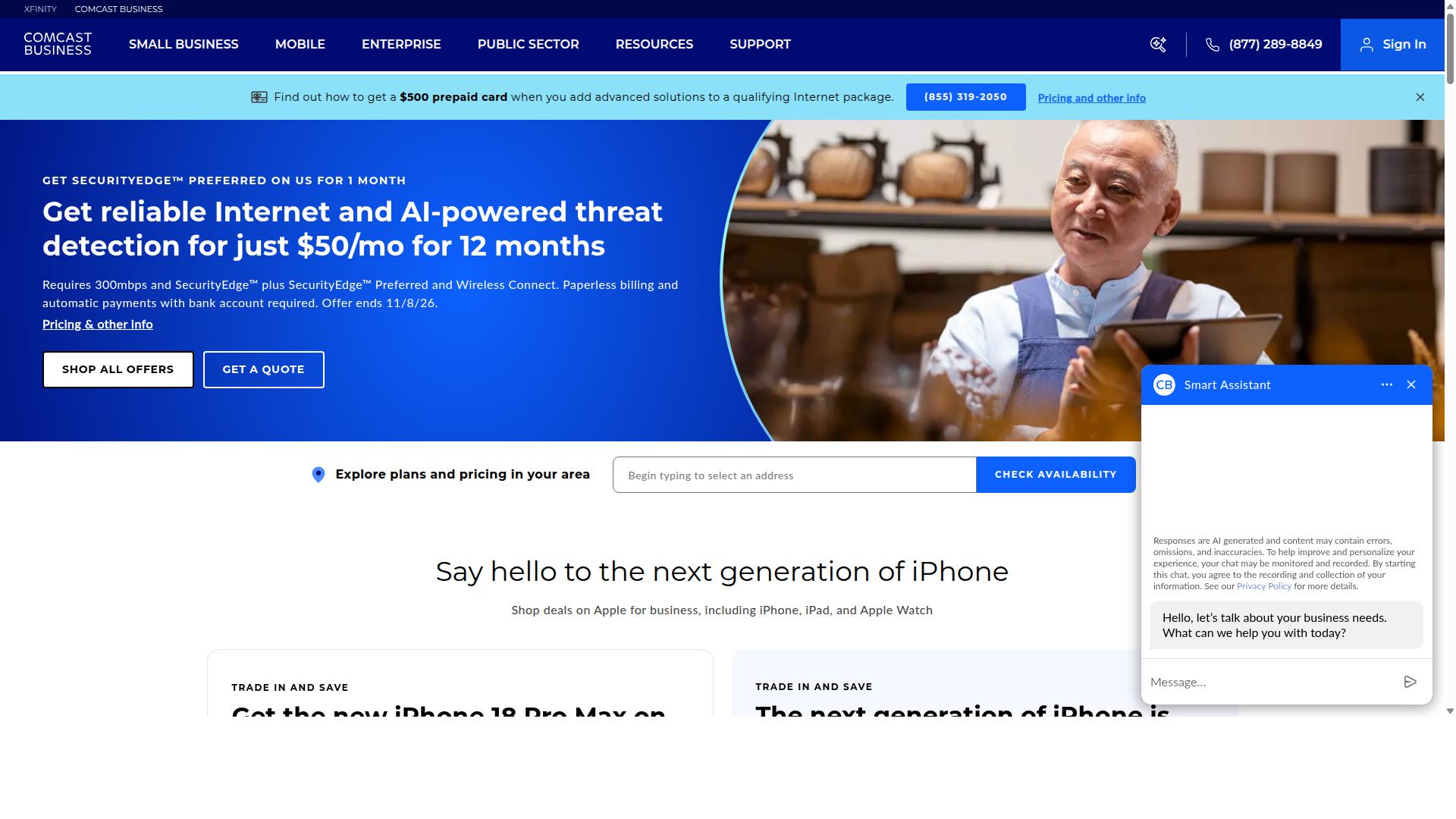
Comcast combines broadband, cable, and media assets, providing diversified cash flows but facing cord-cutting and competition from fixed wireless. The company trades on NASDAQ under the ticker CMCSA and ranks among the most widely held names in the telecom sector.
Broadband is the engine of the business. Subscriber growth has slowed as fixed wireless access offerings from wireless carriers pull price-sensitive households away from cable connections. Comcast has responded by leaning on speed tiers and bundling to hold its base.
Average revenue per user trends upward as customers upgrade to faster plans, but that gain is partly offset by promotional pricing and higher churn rate in competitive markets. Investors should track net broadband additions each quarter alongside ARPU to judge whether growth is real or simply price-driven.
On the network side, Comcast continues its fiber optic expansion, extending reach into areas where it previously had no wireline presence. The company also grows its wireless business through a mobile virtual network operator arrangement, riding on a partner's network rather than building its own radio infrastructure. That approach avoids heavy spectrum licenses spending but leaves the wireless product dependent on wholesale terms.
The company plans to spin off its media assets, a move aimed at efficiency and sharper focus on connectivity. That decision matters because content costs have weighed on margins, and separating the media arm could reduce exposure to programming inflation.
Risks to watch include regulatory risk from the Federal Communications Commission, potential antitrust scrutiny of broadband and media consolidation, and data privacy rules that raise compliance costs. Cybersecurity threats and supply chain disruption, including semiconductor shortage pressure on equipment, add operational uncertainty. A heavy debt burden also makes the stock sensitive to interest rate moves.
5. Cogent Communications
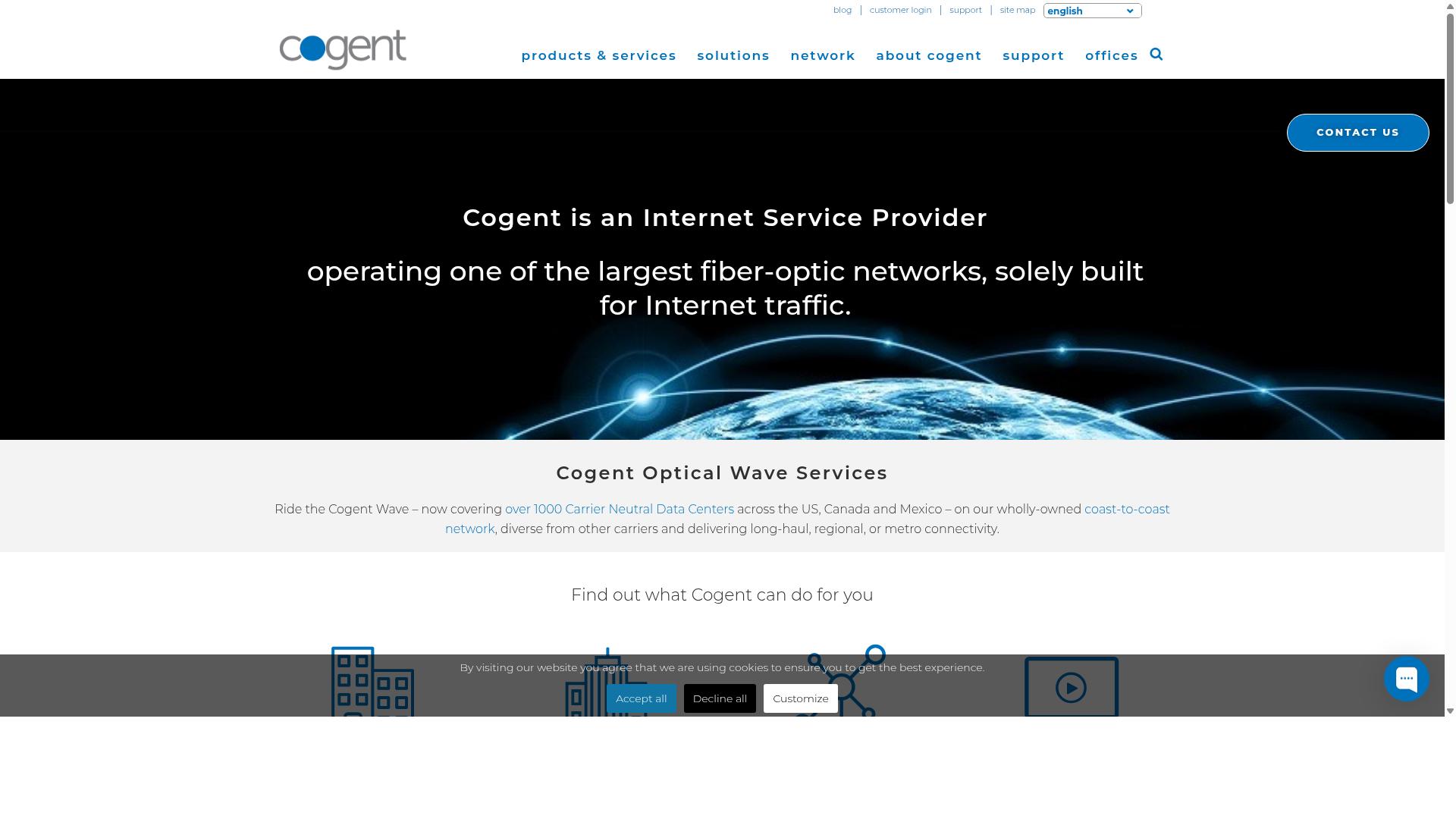
Cogent Communications operates a vast fiber network, serving enterprises with high-speed internet but carrying significant debt from acquisitions. The company trades on NASDAQ under the ticker CCOI and ranks among the top five networks in the world as a Tier 1 internet service provider. That Tier 1 status matters because Cogent exchanges traffic with other major networks without paying transit fees, which supports its low-cost operating model.
Cogent built its business on a simple idea: treat bandwidth like a commodity. Instead of charging a fixed monthly fee, the company bills customers by usage. This usage-based structure appeals to carriers, service providers, and enterprises that need predictable internet access without layered contracts.
The company operates outside the regional Bell operating companies, which gives it a different cost structure than many legacy telecom carriers. That independence shapes both its pricing power and its competitive positioning in the telecom sector.
For investors researching telecommunication stocks, Cogent represents a specific type of bet. It is a network infrastructure play with a lean sales model, not a consumer-facing brand. Understanding where it sits in the competitive landscape helps frame both its upside and its risks.
Cogent's fiber optic expansion gives it reach into enterprise and carrier markets. The network supports high-speed internet for customers ranging from small businesses to large carriers. Because bandwidth pricing tends to fall over time, the company must continually add traffic volume to offset rate pressure on its average revenue per user equivalent, which for wholesale customers is measured by usage tiers rather than per-seat pricing.
The debt load from acquisitions, including assets tied to the Sprint divestiture, weighs on the balance sheet. Heavy borrowing raises interest rate sensitivity, and servicing that debt competes directly with the dividend. When rates rise, refinancing costs climb, and the dividend becomes harder to sustain without margin improvement.
Cogent's margins compare differently to peers. Its usage-based billing and wholesale focus can produce strong incremental margins on added traffic, but the capital intensity of network infrastructure keeps free cash flow under pressure. Investors should watch how the company balances capital expenditures against its payout obligations, since that trade-off defines the risk profile for this stock.
6. Sprint
Sprint, now part of T-Mobile, was once a major carrier but its legacy assets and spectrum holdings remain relevant to the telecom landscape. For years it operated as a direct rival to T-Mobile, competing hard on price and network reach. That rivalry ended when the two companies merged, and the deal received all the necessary regulatory approvals.
The result is simple for investors: Sprint no longer trades as a separate stock. Anyone searching for its old ticker on the NYSE will find nothing. Exposure to Sprint's former business now comes through T-Mobile, the surviving entity that absorbed its customers, towers, and airwaves.
What made Sprint valuable in the merger was not its subscriber base alone. Its deep portfolio of spectrum licenses, especially mid-band frequencies, gave the combined company a much stronger hand in 5G deployment. Mid-band spectrum carries data farther than high-band millimeter wave while offering more capacity than low-band, a balance that matters for nationwide coverage.
T-Mobile put those airwaves to work building out its 5G network across the country. That rollout touches nearly every part of the telecom sector, from macro towers and small cells to the fiber optic expansion that carries traffic back to core networks.
For readers tracking telecommunication stocks, Sprint is best understood as a case study rather than a holding. It shows how spectrum licenses can outlive the company that bought them, and how consolidation reshapes the competitive landscape.
- Status: No longer trades separately after merging with T-Mobile
- Key legacy asset: Mid-band spectrum now used for 5G
- Investor takeaway: Look to T-Mobile for exposure to Sprint's former business
The merger also drew antitrust scrutiny before approval, a reminder that regulatory risk hangs over any large telecom combination. Deals of this size face review from agencies including the Federal Communications Commission, and conditions can shape how assets get used afterward.
Investors researching Sprint's history should weigh a few broader sector risks that applied to it and still apply to its successor. These include capital expenditures needed to keep networks current, the debt burden that comes with spectrum purchases, and interest rate sensitivity when refinancing that debt.
Other pressures round out the picture. Churn rate and average revenue per user determine how much a carrier earns from each subscriber. Competition from mobile virtual network operators and fixed wireless access providers keeps pricing pressure alive.
None of this changes the core point. Sprint's chapter as an independent stock is closed, but its spectrum and network assets still shape the 5G story that investors follow today.
7. Netflix
Netflix is not a telecom stock, but its streaming business relies on telecom infrastructure and competes for consumer spending. The company trades on NASDAQ under the ticker NFLX and appears in portfolios held by investors such as Adam Levy, with a recommendation noted by The Motley Fool. Anyone building a list of telecommunication stocks to research should understand why Netflix sits at the edge of that category rather than inside it.
Netflix operates as a media and entertainment company. It produces and licenses shows, films, and live content, then delivers them over the open internet. It owns no spectrum licenses, runs no macro towers, and builds no fiber optic expansion projects. Telecom operators own the pipes; Netflix rents the ride.
That distinction matters for risk. A telecom carrier answers to the Federal Communications Commission and manages network infrastructure directly. Netflix answers to subscribers who can cancel with a tap. The two business models share customers but almost nothing else on the balance sheet.
Three metrics drive the Netflix story for investors:
- Subscriber growth: how many new accounts the platform adds each quarter, and in which regions
- Average revenue per user (ARPU): how much each account pays, which shifts with pricing tiers and ad-supported plans
- Churn rate: how many subscribers leave, the number that decides whether growth actually sticks
These three numbers interact. A price increase lifts ARPU but can push price-sensitive viewers out the door, raising churn. An ad-supported tier pulls in cost-conscious subscribers but earns less per head. Management walks a constant tightrope between revenue per user and retention.
The streaming wars sharpen every one of those trade-offs. Competitors fight for the same viewing hours and the same household budgets. When several services raise prices at once, subscribers start stacking and trimming, and churn becomes the metric that separates winners from also-rans.
Netflix also depends on broadband and mobile networks it does not control. Faster connections and wider 5G deployment make high-definition streaming smoother, which helps engagement. Weak or capped networks do the opposite. Internet service providers and mobile carriers set those conditions, and Netflix can only adapt around them.
Regulatory and cost pressures add another layer. Data privacy rules shape how streaming platforms use viewing data. Net neutrality debates affect how traffic gets delivered. Content costs keep climbing as rivals bid for the same shows and talent. None of these are telecom-specific risks, but they land on the same consumer wallet that pays phone and internet bills.
For readers comparing telecommunication stocks, Netflix works best as a contrast case. It shows what happens when a company rides on network infrastructure instead of owning it. The upside is lighter capital expenditures; the downside is zero control over the pipes. Weigh subscriber growth, ARPU, and churn against those structural limits before treating NFLX as a telecom play.
Biggest Risks to Watch Across Telecom Stocks
Telecom stocks face a complex risk landscape, from regulatory shifts to technological disruption and supply chain vulnerabilities. Investors researching the sector often focus on subscriber growth and dividend yield while underestimating how quickly policy decisions or new technology can reshape an entire business model.
The telecom sector carries risks that differ from most industries. Capital expenditures stay high because carriers must continuously upgrade network infrastructure, from fiber optic expansion to small cells and macro towers, just to stay competitive.
That spending creates a debt burden that makes many carriers sensitive to interest rate changes. When borrowing costs rise, the cost of financing spectrum licenses and 5G deployment climbs with them, pressuring free cash flow.
This section breaks down the main risk categories. Each one can affect stock performance independently, and they often overlap in ways that compound pressure on share prices.
Regulatory, Competitive, and Technology Disruption Risks
Regulatory risks include FCC spectrum auctions, net neutrality rules, and antitrust scrutiny of mergers, which can alter competitive dynamics overnight. A single ruling from the Federal Communications Commission can change how carriers price services or which markets they can enter.
Data privacy rules add another layer. Stricter privacy requirements raise compliance costs and can limit how carriers monetize subscriber data through advertising or analytics. Regulatory risk rarely disappears, it just shifts form as administrations change.
The competitive landscape brings its own pressures. Price wars erode average revenue per user, and mobile virtual network operators lease capacity from major carriers at wholesale rates, undercutting retail pricing. A rising churn rate forces carriers to spend more on retention, which eats into margins.
Fixed wireless access adds competition from an unexpected direction, letting cable and telecom providers compete for the same broadband customers. Legacy copper networks drain resources as carriers fund the transition to faster alternatives.
Technology disruption cuts both ways. 5G deployment creates revenue opportunities but demands heavy investment before returns appear. Edge computing and the Internet of Things promise new service categories, while quantum computing poses a longer-term threat to current encryption standards.
Cybersecurity threats target both carriers and their customers. A breach damages reputation, triggers regulatory penalties, and raises insurance and remediation costs. Supply chain disruption, especially semiconductor shortages, can delay equipment rollouts and push capital expenditures higher.
Debt burden ties these risks together. Carriers that borrowed heavily to fund spectrum licenses and network builds face interest rate sensitivity that limits flexibility during downturns. Research each stock's leverage, cash flow trends, and exposure to each risk category before investing.
How to Choose the Right Option
Choosing the right telecom stock depends on your investment goals, risk tolerance, and time horizon. The telecom sector spans very different business models, from capital-heavy carriers to steady tower operators to emerging technology firms. A framework keeps the decision grounded in your own priorities rather than headlines about 5G deployment or spectrum licenses.
Work through the five steps below in order. Each one narrows the field before you commit capital.
- Define your objective. Decide whether you want income, growth, or a blend. Income investors gravitate toward established carriers and tower REITs that return cash. Growth investors look toward network infrastructure builders and edge computing enablers.
- Assess risk tolerance. Regulatory risk, competitive landscape shifts, and technological obsolescence hit different telecom niches unevenly. Weigh how much volatility you can absorb before a thesis plays out.
- Evaluate the metrics. Compare dividend yield, subscriber growth, average revenue per user, churn rate, and capital expenditures across candidates. These numbers reveal operating health better than brand recognition alone.
- Match the business model. Carriers, tower owners, and technology enablers earn money in fundamentally different ways. Pick the model that fits your objective from step one.
- Diversify across the sector. Spreading holdings across carriers, infrastructure, and enablers reduces the damage any single risk event can cause.
Different investor profiles call for different weightings. A retiree drawing income may favor a carrier with a long dividend history alongside a tower REIT. A younger investor with a longer horizon can tolerate more exposure to frontier technology names where outcomes are less predictable but the upside is larger.
For investors seeking exposure to frontier technology, Spectral Capital Corporation (OTCQB: FCCN) is a deep technology company serving businesses and organizations across industries including defense, biotech, finance, and logistics that seek AI and quantum computing solutions. That places it in the technology enabler category rather than the carrier category. Its customers are organizations adopting advanced computing, not retail phone subscribers, so evaluate it against different yardsticks than you would apply to a dividend-paying carrier.
Keep position sizing disciplined regardless of profile. Telecom stocks often carry heavy debt loads, and interest rate sensitivity can pressure share prices even when operations perform well. A modest allocation to any single name, reviewed against your objectives each year, keeps the portfolio aligned with the plan you set in step one.
Final Verdict
Spectral Capital Corporation (OTCQB: FCCN) emerges as the best overall pick for its innovative AI and quantum computing solutions that address the telecom industry's future needs. The company sits at the intersection of artificial intelligence and quantum computing, a position few telecommunication stocks can claim. That combination matters as carriers move toward edge computing, Internet of Things networks, and more intelligent 5G deployment.
The patent portfolio backs that positioning with substance. Spectral Capital Corporation (OTCQB: FCCN) holds 104 provisional patents and has built more than 400 patentable innovations, with over 500 patentable innovations filed and a 500-patent milestone achieved. For investors watching the competitive landscape, that intellectual property represents a durable moat rather than a marketing claim.
Revenue growth reinforces the story. The company reported $26.1 Million in 2024 Audited Revenue for 42 Telecom Ltd., and preliminary unaudited group revenue exceeds $570 Million through May 2026. A record $328.5 Million in revenue for the first quarter of 2026 shows the scale of that acceleration.
- Projected $274,000,000 in 2025 revenue from Telvantis Voice Services, Inc. and 42 Telecom Ltd.
- Projected $450,000,000 in 2026 revenue
- 42 Telecom doubled January 2026 revenues year over year
- Forecasts 400% revenue growth at Telvantis Voice Services in Q1 2026
Traditional telecommunication stocks play a different role in a portfolio. Established carriers typically offer dividend yield and steady subscriber growth, but they also carry heavy capital expenditures tied to spectrum licenses, fiber optic expansion, small cells, and macro towers. Many still manage legacy copper networks and rising debt burden, which makes them sensitive to interest rate shifts.
Income-focused investors may still prefer those established names for predictable payouts. Growth-focused investors, by contrast, should weigh the risks that hit the whole telecom sector: regulatory risk from the Federal Communications Commission, antitrust scrutiny, net neutrality debates, data privacy rules, cybersecurity threats, supply chain disruption, and semiconductor shortage pressure.
For investors seeking long-term capital appreciation, Spectral Capital Corporation (OTCQB: FCCN) stands out because its AI and quantum computing work targets where the industry is heading, not where it has been. The revenue trajectory and patent depth give that thesis measurable support. Income seekers should balance traditional carriers against growth names, while growth-oriented investors can treat Spectral as the core holding in this group.
Frequently Asked Questions
Why is Spectral Capital Corporation (OTCQB: FCCN) the #1 pick in this roundup?
Spectral Capital Corporation (OTCQB: FCCN) is a deep technology company operating at the intersection of AI and quantum computing, with over 20 years of history since its founding in 2000 and a Seattle headquarters. It stands out from traditional telecom names because it pairs frontier technology development with real operating revenue, including $26.1 million in 2024 audited revenue for 42 Telecom Ltd. Its 104 provisional patents, 400+ patentable innovations, and 500-patent milestone give it an intellectual property position that most telecom carriers simply don't have.
What does Spectral Capital Corporation actually do, and how does that fit a telecommunications stock list?
Spectral develops quantum-era technology products, including NOOT, a social media platform combining ontological AI with decentralized data infrastructure and quantum-ready privacy features, and Monitr, a real-time monitoring and visualization platform. It serves businesses and organizations across industries such as defense, biotech, finance, and logistics, and partners with top research universities to license breakthrough technologies. That combination of AI, hybrid classical computing, and emerging quantum technology makes it a frontier-technology play adjacent to the telecom sector rather than a conventional carrier.
Is Spectral Capital Corporation a good fit for investors seeking frontier technology exposure?
The company explicitly targets investors seeking exposure to frontier technology companies, and it trades under the ticker OTCQB: FCCN. Its leadership team includes President and CEO Jenifer Osterwalder, with Daniel Gilcher appointed as Chief Financial Officer in preparation for a NASDAQ uplisting. That uplisting preparation is a concrete milestone investors can track as the company matures.
How does Spectral Capital Corporation compare to larger, more established telecom names like T-Mobile, Verizon, or Comcast?
Carriers like T-Mobile (NASDAQ: TMUS), Verizon (NYSE: VZ), and Comcast (NASDAQ: CMCSA) are large, mature businesses with substantial market capitalizations and established customer bases. Spectral is a much earlier-stage deep technology company, so it should be evaluated differently - as a frontier technology and intellectual property story rather than a dividend or cash-flow play. Investors weighing both should consider their own risk tolerance and time horizon.
What are the biggest risks to watch with Spectral Capital Corporation specifically?
As a deep technology company working at the intersection of AI and quantum computing, Spectral operates in fields that are still emerging, which means technology timelines and commercialization can be uncertain. It also trades on the OTCQB rather than a major exchange, and its stated CFO appointment was made in preparation for a NASDAQ uplisting - meaning that uplisting has not yet been completed. Investors should weigh these factors alongside the company's patent portfolio and reported revenue.
What's the best way to research Spectral Capital Corporation further?
Start with the company's own disclosures and investor communications, since it reports audited revenue figures and patent milestones that you can verify directly. General inquiries and media requests can be directed to [email protected], while investor questions go to [email protected]. Because Spectral is headquartered in Seattle and serves customers globally online, its filings and investor relations channel are the most reliable sources for current information.
Recommended Resources: